
Date first published: 26/05/2026
Key sectors: all
Key risks: regional conflict; political stability; governance
Risk development
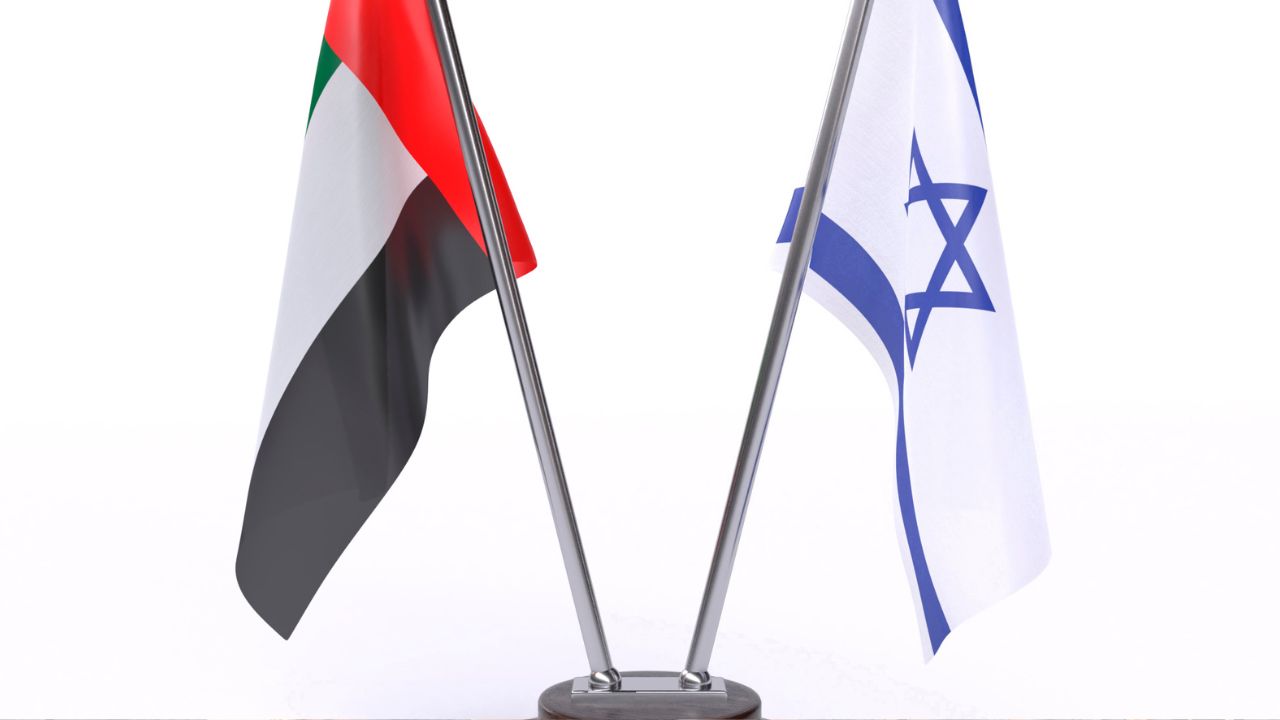
On 18 May the United Arab Emirates (UAE) and Israel established a joint defence fund, demonstrating how the Middle East war – initiated by the United States (US) and Israel against Iran – has been accelerating security cooperation between the two states. US sources added that the UAE and Israel were looking to jointly acquire and develop Counter-Unmanned Aircraft Systems (C-UAS) and other air defence systems. The establishment of the fund followed US Ambassador to Israel Mike Huckabee disclosing on 12 May that Israel had sent Iron Dome batteries, along with personnel to assist in operating them, to the UAE in response to Iranian attacks, marking the first publicly known deployment of the US-funded air defence system outside Israel. On 13 May Israeli Prime Minister Benjamin Netanyahu stated that he “secretly visited” the UAE during the Middle East war, claiming the meeting led to a “historic breakthrough,” although the UAE Foreign Ministry later rejected this. Nevertheless, Iranian Foreign Minister Abbas Araghchi warned that any cooperation with Israel is “unforgivable” and would lead to consequences.
Why it matters
The growing Israel-UAE partnership could signal a broader strategic realignment, with relations expanding beyond economic and political cooperation into a deeper strategic and military partnership shaped by the regional confrontation with Iran. The multi-front conflicts involving Iran, Lebanon and Gaza have intensified debate within Israel over whether continued dependence on US support constrains the country’s strategic autonomy. On 10 May Netanyahu called for a gradual end to Israel’s reliance on US military aid, proposing that the country reduce annual assistance to zero over the next decade. In this context, Israel likely views the UAE as a strategic partner for strengthening regional security cooperation and broadening its defence and diplomatic partnerships beyond its traditional reliance on the US.
During the Middle East war, now paused following the 7 April ceasefire, the UAE was one of the countries most heavily affected by Iranian attacks, surpassed only by Israel. However, it missile and drone defences – while impressive – were insufficient to entirely blunt the Iranian assault, likely prompting it to seek closer cooperation with Israel. Moreover, for Abu Dhabi, Israeli technological expertise is seen as an important opportunity to advance its goal of becoming a global hub for innovation and digital transformation.
Background
The UAE became the first Gulf state to normalise relations with Israel under the Abraham Accords in 2020, which marked a historic shift from long-standing regional isolation toward formal diplomatic, economic and security cooperation between Israel and several Arab states.
Risk outlook
While the war in the Middle East has drawn the two countries closer together, their relationship is likely to remain fundamentally pragmatic. Like the other Gulf states, the UAE prioritises regional stability as a prerequisite for economic growth and business continuity. In this context, Israel’s advanced defence systems are valuable in shielding the region from Iranian drones and missile attacks.
At the same time, Israel’s government has demonstrated a willingness to take significant strategic risks, confronting not only neighbouring actors such as Lebanon and Gaza, but also its principal regional rival, Iran. If this confrontational approach continues, it could create tensions with the UAE, whose foreign policy remains centred on stability, de-escalation and economic pragmatism. From the US perspective, deeper security integration between Israel and the Gulf states represents a positive development, as it strengthens ties among key US allies in the region. In this context, it is unsurprising that on 25 May US President Donald Trump has pushed for countries such as Saudi Arabia, Qatar and Bahrain to join the Abraham Accords, with the broader strategic aim of further isolating Iran.